
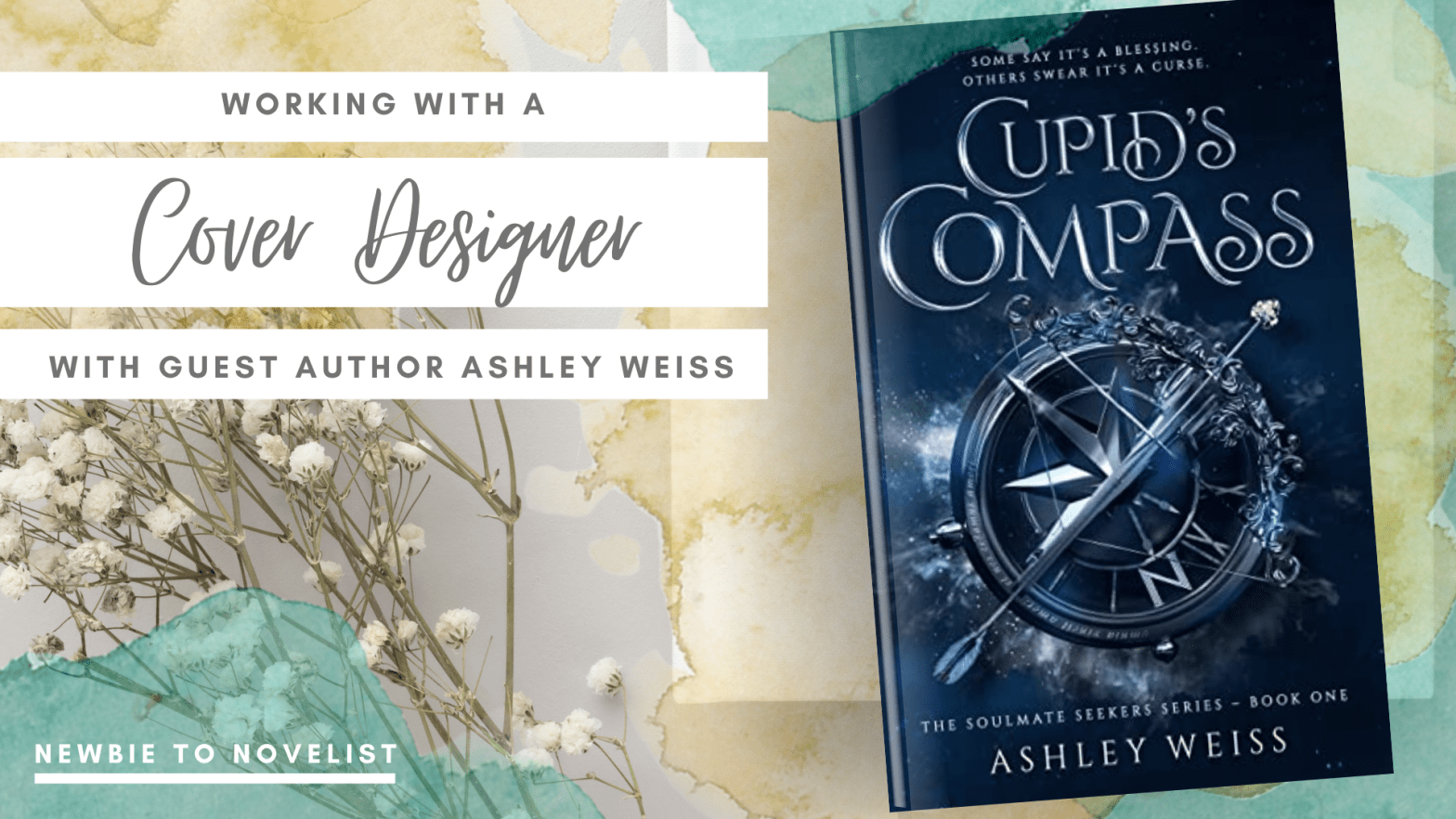
There are hundreds of decisions that come with being a writer. One big one is what type of publishing you plan to navigate. Obviously, there are pros and cons to each type: traditional, indie, or hybrid. But one huge pro of the self/indie publishing bucket is the full ownership of your cover design.
Today, I’m excited to have a personal writing friend of mine, Ashley Weiss, discuss her experience working with a cover designer for her debut novel Cupid’s Compass. Read along to find out what you might expect if you choose this route for yourself!
Working with a Cover Designer
By Ashley Weiss
Contents:
The best part of self-publishing
The absolute best part of indie publishing is having complete creative control, especially over your book’s cover. While mainstream publishing houses do their best to design books, their choices aren’t always crowd favorites. From permanent stickers to sudden spine height changes mid-series, publishers’ marketing schemes are loathsome. This is one of many reasons designing your own book is so satisfying.
When to start the cover design process
My process began the day I started writing my book, Cupid’s Compass. Because the design of the magical compass was so detailed and integral to the story, I sketched out the cover concept right away. It was a laughable pencil sketch, but it helped me visualize the world-building, so I prioritized the task.

Most writers could have a finished, edited manuscript before even considering the cover. In some ways, it’s like the title of the book. Sometimes you need it sooner, other times it comes later.
Despite my early sketch, it wasn’t until months later, after I finished the first draft, that I started researching designers I admired. I did this by scrolling through Instagram and looking through the books I owned.
Ultimately, I reached out to my chosen designer at the very end of my editing process, which was six months before the book’s launch—and I’m lucky I did. My dream designer was already booked three months in advance. Because I wanted my book cover finished three months before printing began for marketing, I almost missed out. In the future, I would ideally reach out to my designer 6-9 months in advance, though there are ways to have a cover made in as little as 10-12 working days with some sacrifices.
Picking a cover designer
There’s a handful of considerations that should go into choosing the person who will create the face of your novel.
- Experience with your genre and audience. (For example, you don’t want to hire a Young Adult Fantasy designer for a children’s book)
- A natural style you gravitate to
- Availability to meet your deadlines
- Cost within your budget
Price ranges
The price of book covers varies wildly. A writer could design their own cover for free, utilize pre-made covers for only a few hundred dollars, or hire custom cover designers for up to and sometimes over a thousand dollars. The experience of a designer and the products offered can greatly affect the cost. For Cupid’s Compass, I was prepared to break the bank.
NOTE: THIS IS NOT GOOD SELF-PUBLISHING ADVICE. Read at your own risk.
I started with a budget of $500 CAD [~$370 USD] but in the end I spent $1,500 [~$1,100 USD]. I decided it was worth the money for a few reasons: one, it was my first book; two, the compass design was complex and integral to my marketing plan; and three, I have always been a sucker for stunning books. For me, the quality and face of my novel was one of my highest values, but most authors do not go this route. From my research, $500 would have been a reasonable budget, but I was prepared to spend more to make my dream a reality
Now, why did my cost end up so high? First, my cover designer. Franziska Stern is an incredibly talented and experienced designer with a huge YA fantasy portfolio. She books months out and is an artistic genius. While she offers à la carte options such as a simple hard case, logo, or font design, she also offers cover designs in packages.
The second jump in cost came with my package selection. When I scrolled through her services, I ended up picking the platinum service. The flat rate included a full cover design, custom font, ebook/paperback/dust jacket files, cover reveal graphics, usage rights, and a ten percent discount for future same-series work. The other big inclusion, and why I ultimately chose this package, was because it came with unlimited revisions. Standard packages only offered five rounds of revisions. I knew I would go to the end of the Earth to get my compass design perfect and I decided the unlimited revisions alone made that price worth it. And man, am I glad I paid for it—but we’ll get to that.
The “interview”
My fabulous cover designer was excellently prepared for this part of the process. After confirming our deadlines were compatible, she had a series of forms for me to fill out. The first form was a highly detailed questionnaire. It asked everything from the size of my book, whether it was part of a series, if I wanted a tagline on the front, what formats I planned on creating, which platforms I was publishing on, and more. It was intense, but that was only the beginning.
The next portion included selecting my favorite styles from her previous designs, indicating color preferences, adding an optional Pinterest mood board, and a blank section for filling in any missing details. As expected from an author—I wrote an essay-length description. I was even able to attach photos of my own sketches and designs I was inspired by. My advice when you get to this part of the process is: do not rush or improvise. Read all the options, do your research as to what you want, and be as clear as possible about what you are imagining.
The first look
My designer confirmed she could take my project on and I promptly submitted all the forms, pictures, and surveys. Then came two and a half months of radio silence. I mean, she had a three-month waitlist, but it wasn’t until two weeks before the deadline that I got my first look at what she interpreted from my submission.
But when that email finally showed up, I was floored. Jaw gaping, I could hardly believe how freaking COOL it was. I’d imagined this cover for years, but to see it actually come to life almost exactly as I pictured, it seemed like a miracle. I was head over heels and knew that even if I didn’t change a single thing, this cover was spectacular.
While it’s not customary for people to share the early editions of their cover, I think this blog would be lacking without the visuals. So, here we have the first-ever design of Cupid’s Compass:
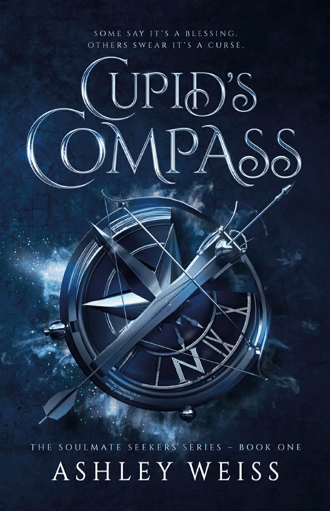
Isn’t it epic? And while I was blown away by the details and highly entertained by some of the creative liberties she took, the longer I sat with it the more I saw what it wasn’t.
“It gives me Hunger Games vibes, and it’s really quite masculine. This feels more like ‘Jupiter, god of lightning and thunder’ vibes than ‘Cupid, god of love’.”
As so began two weeks of revisions and mental spiraling.
Providing feedback
This was probably the hardest part for me. I knew what I didn’t want, but I had a hard time articulating how I wanted it to change and struggled with criticizing the artist’s efforts. But, email by email, we made adjustments. My first batch of feedback I asked to add a bunch of details to make the design more romantic and like the book description, and boy did that backfire.

This was the absolute worst the cover ever looked and I can’t tell you how much I wanted to jump ship and just stick with the first version at this point. But, I knew the vibes weren’t right in the original and it was just a matter of finding the perfect balance between my designer’s skills and my imagination.
Through our shared Adobe cloud, I left dozens of pinned comments to change a particular design size, placement, or brightness. At a desperate point, I scribbled with primary colors all over the design to try to demonstrate what needed to be different. Though hilarious, it did the trick.

There were at least seven drafts, almost always making changes to the compass itself. Here’s another peek at the progression following the chaotic second attempt.

This was a lot closer to what I wanted, but still had multiple details to add or correct such as the quote along the rim. So, how do you know when to stop? For me, it was the day Fran sent me a cover that I could honestly say didn’t need any changes. It was a bittersweet moment; after two weeks of picking this cover apart, I’d begun to only see faults and second-guessed every change I made.
I turned to my friends and family for affirmation when my own eyes became too tainted by revisions. They all swore the newest version reflected the book much better than the original and all the hours of emails turned out for the better.
Author copy proofs
The next step was ordering the first-ever physical copy, and I was glad I paid to see the product early. Fran warned me if I chose a matte finish the imagery would be darker, and she was right. Lots of the fine details of my compass were lost in the print and I ended up asking her to brighten the highlights further. There was also a curious issue with my hardcover version where the cover, spine, and back cover were not centered. Luckily, Fran was more than happy to make adjustments until we could get the template to fit perfectly.
End product
Ultimately, after all the time and money and energy was spent, this was my final product:
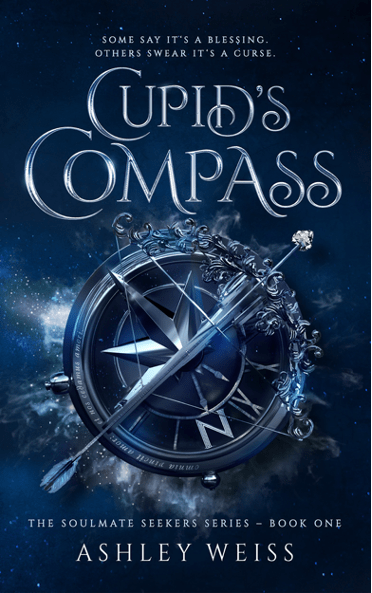
Designing this cover was significantly harder than I expected, but highly rewarding. I’m so glad I got direct creative rights over the end product. Could you imagine what some random producer might have designed without ever having read the book? I doubt it would have held up even against the first of my designer’s drafts.
In summary, designing a cover can take a lot of meticulous time and care, but it is incredibly rewarding. Patience and perfectionism can pay off, but if the stress of design work isn’t for you, I recommend picking a pre-made cover for ease and cost efficiency. And lastly, when in doubt, reach out to your betas for feedback. They can be incredibly helpful!

About Ashley
A natural storyteller with a flair for the dramatic, Ashley Weiss lives in Alberta, Canada. She started her debut novel, Cupid’s Compass, in March 2020 when she was off work due to the pandemic. Today when Ashley isn’t writing, she can be found collecting the socks her dog notoriously steals, watching movies with her love, or buying books faster than she can read them.
Find updates from Ashley on her Website, Facebook, and Instagram!
Take a sneak peek at Cupid’s Compass:

Thanks for reading! Please check out other posts and follow the blog for more writing content! I’m always open to topic suggestions for future articles!
 Newbie to Novelist